Fabric and Structure: What Holds a Shape and What Collapses
- Curve File Editorial Team
- 09 Mar, 2026
Two garments can have the same shape on the hanger and behave completely differently on a body, because fabric is not a neutral surface. It has weight, memory and direction. Above a certain size, those properties matter as much as the pattern, and unlike the pattern they are something you can assess in a minute.
The three things fabric does
It hangs. Every fabric falls under its own weight. A light knit follows the body and shows every line underneath it; a heavier knit or a woven falls in straighter folds and skims. This is the single biggest difference between a cheap-looking knit dress and an expensive-looking one, and it has nothing to do with the price on the tag.
It stretches, and then it recovers — or it does not. A knit with good recovery returns to shape after being pulled, which is why it can fit closely without constricting. A knit with poor recovery hangs looser by the end of the day, bagging at the elbow, the knee and the seat. Elastane is what usually provides recovery; the higher the percentage, the more the garment depends on it.
It holds a structure — or the structure is built in elsewhere. A woven garment with no stretch cannot adapt to you, so its shape has to come from the pattern, the seams and, in tailored clothing, from interfacing and canvas inside the layers.
Weight is the number to look for
Where a brand publishes fabric weight in grams per square metre, use it. Weight is the clearest predictor of how a knit will behave.
- Very light knits cling, show underwear lines and outline the shape of the body underneath. In pale colours they are close to transparent, and no amount of styling fixes that.
- Mid-weight knits are the workhorse: enough body to skim rather than cling, enough stretch to fit closely without straining.
- Heavy knits and structured wovens hold their own shape and can carry design details — a defined shoulder, a wide waistband, a deep pleat — without collapsing.
Where weight is not published, judge it by feel in a shop or by the description of what the fabric is used for. Ponte, heavy jersey, scuba and double-knit fabrics exist precisely because a single layer of jersey is not enough for a garment with structure.
Read the fibre, then read between the lines
Fibre content is published more often than weight, and it is a decent proxy.
Cotton is breathable, holds a crease, and can be pressed — useful if you want a sharp line. It has no natural stretch, so a cotton garment with no elastane must fit you properly rather than adapt.
Linen and viscose drape well and crease easily. Viscose in particular can shrink or distort if washed carelessly, and it often looks expensive in a shop and tired after three washes.
Wool holds shape, resists creasing and can be steamed back into line, which is why tailoring depends on it.
Polyester blends are not automatically bad. A tight polyester weave can be durable and hold colour; a loose shiny one will pill, cling and hold odour.
Elastane above all is the one to notice. A garment with a high proportion is relying on the stretch instead of on fit, and it will relax as the day goes on.
Where structure actually lives
Structure is not the same as stiffness. It is the collection of decisions that make a garment hold a shape:
- Seams that follow the body. Princess seams, waist seams and darts give a garment a place to fit around rather than a single circumference to stretch across. A flat-fronted garment with no seams has to work by stretch alone.
- Facings, interfacing and lining. A jacket that holds its shoulder has something inside it doing that work. An unlined jacket in a thin fabric will not.
- A waistband with depth. A wide, interfaced band supports a trouser waist instead of rolling and digging.
- A hem with weight. Light, narrow hems ride up. Deeper hems fall better and can be let down later.
- Grain and cut. A bias-cut panel drapes; a straight-cut one hangs. Where a pattern uses bias, it is usually to let the fabric move around a curve rather than fight it.
What “flattering” means in practice
The word is overused, and it usually implies a body that needs disguising. Put in construction terms, it means something narrower and more useful: the fabric does not catch on the body, the seams land where they were drafted to land, and the garment keeps its shape for a whole day.
That gives you three practical tests, all of which you can do before owning the garment:
- The light test. Hold the fabric up to a window or a phone torch. If you can see your hand clearly through one layer, plan for a second layer or a darker colour.
- The fist test. Crush a handful of the fabric, hold it for a few seconds, then release. Does it spring back, or does it stay crumpled? Fabrics that stay crumpled will crease at every seat and elbow.
- The drape test. Hold the fabric up by one corner and watch it fall. If it falls in tight folds that follow your hand, it will follow your body the same way. If it falls in broad, straight lines, it will skim.
A note on care, because it changes fit
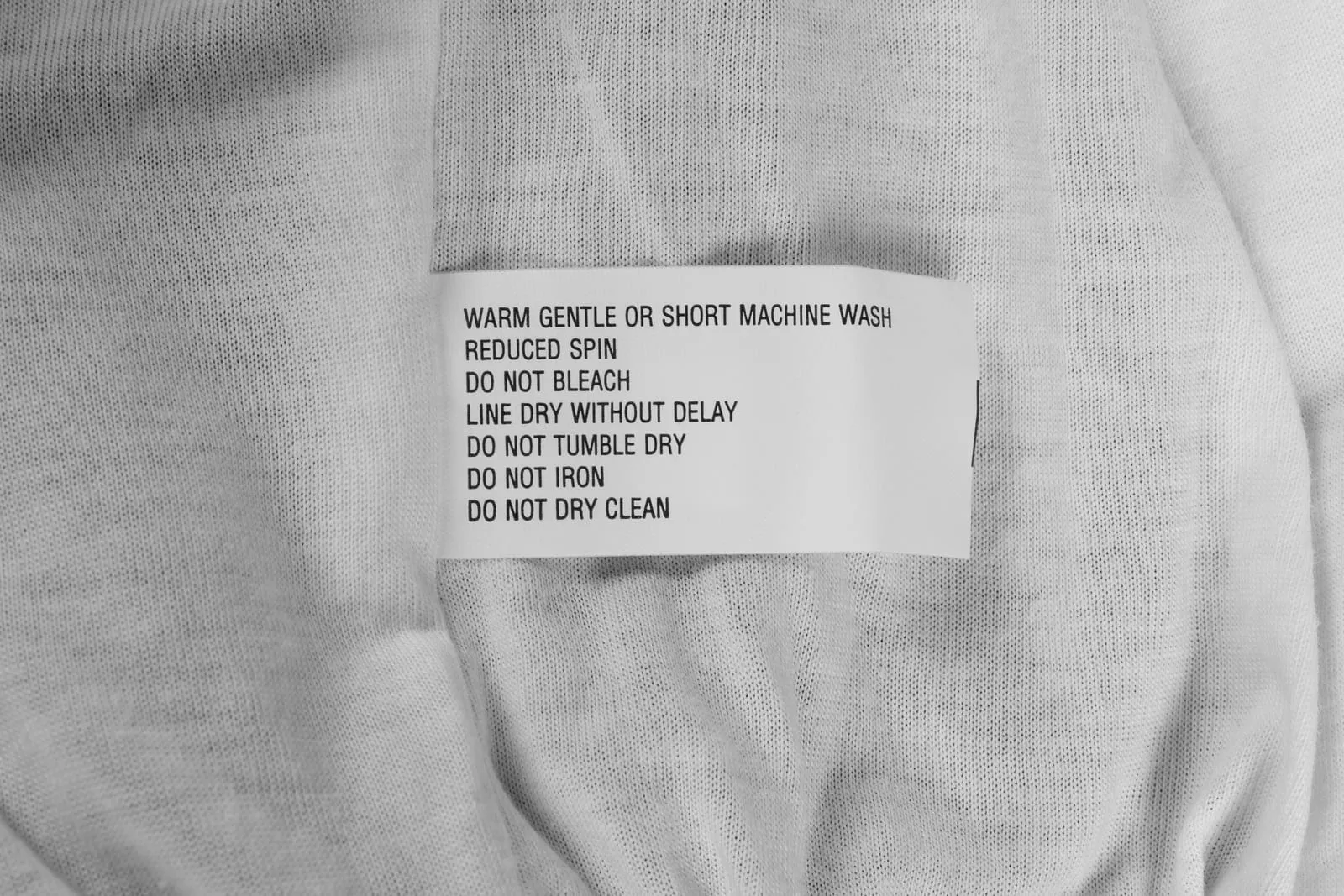
Fabric behaviour does not end at the checkout. A knit washed hot and dried in a machine loses recovery and grows; a wool jacket washed at home loses its shape and its shoulder. Anything that fits well enough to be worth keeping deserves a care check before its first wash, and a knit that is stored on a hanger rather than folded will stretch at the shoulder within a season.
Judging fabric well will not make an ill-graded garment fit. It will stop you buying the ones that were never going to hold up, and it will help you spot the ones that will still look like clothes in two years.